Video Pipeline
Automated media processing and compilation system with AI-powered analysis and a web-based editing interface
Overview
An automated media organization, analysis, and compilation pipeline that transforms raw video and image collections into polished, publication-ready compilations. A Python backend handles metadata extraction, AI-powered visual analysis, and ffmpeg-based encoding, while a full Next.js web interface provides project browsing, sidecar editing, manifest control, and real-time pipeline monitoring.
Turning hundreds of raw clips and photos from a trip or shoot into a watchable compilation is tedious and time-consuming. Manually rating footage, fixing rotations, detecting timelapse sequences, choosing music-synced cut points, and applying consistent color grading across dozens of clips requires hours of repetitive editing work that follows predictable patterns.
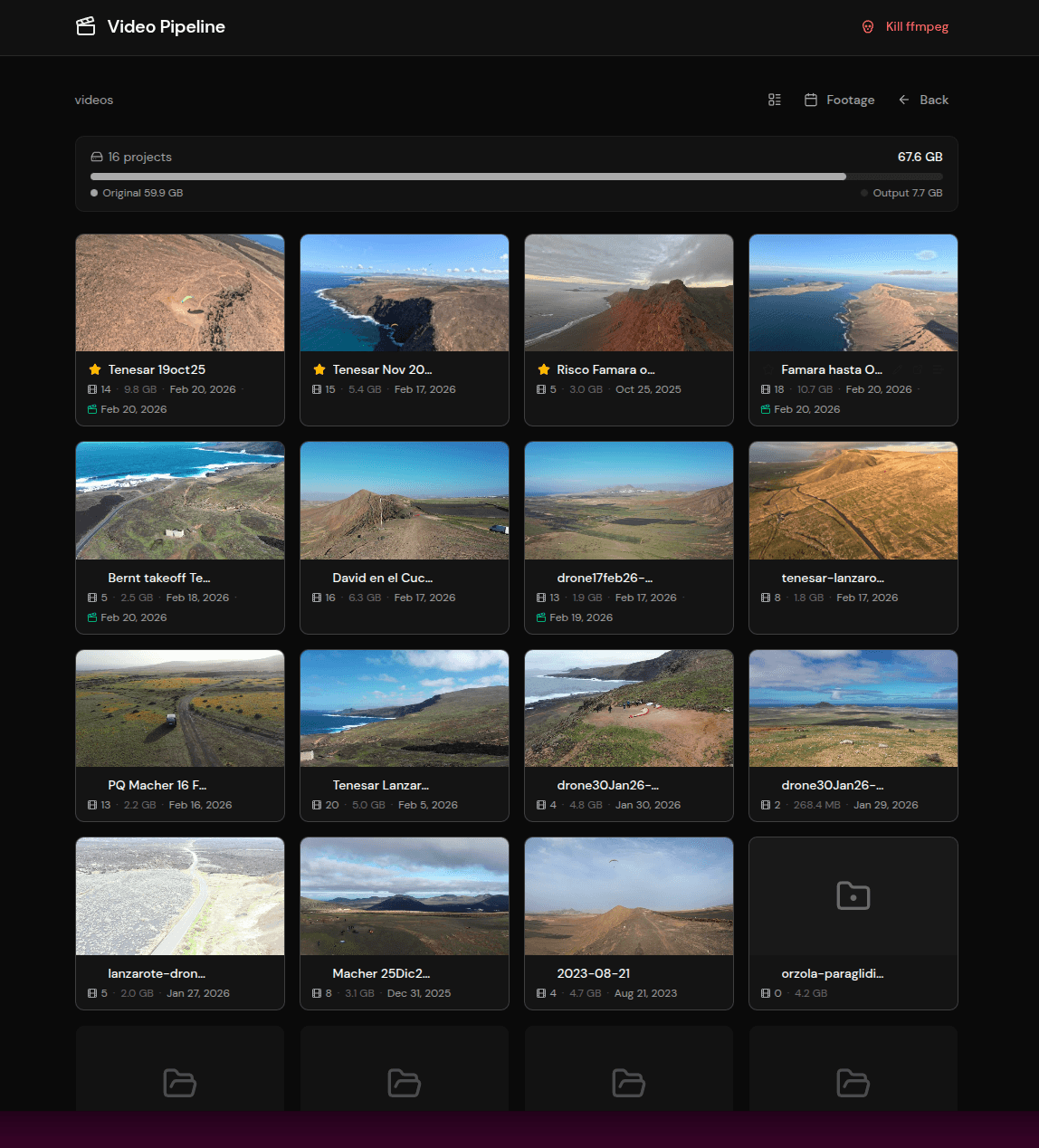
We built a deterministic Python pipeline that enriches source folders in-place: extracting rich metadata (resolution, GPS, HDR, scene complexity), fixing rotations, detecting image groups, and generating thumbnails. A single batched Claude API call scores and describes every file visually. The compilation engine then assembles clips ordered by score, synchronized to music beats, with color grading, transitions, and text overlays. A compile manifest allows fine-grained manual control over trim points, ordering, and transitions without re-encoding the entire project.
What previously took hours of manual editing now runs as a single command. The idempotent design means folders can be safely reprocessed as new footage arrives. The web interface replaced the need for terminal-only workflows, making the tool accessible for reviewing and tweaking compilations visually before final export.